Photos & Words By Carol Polich
Seasonal Rituals of the West’s Wild Mammals & Raptors
August: Bison Battles Begin
“ …In a sudden clash of the titans, engulfed in dust, the bison bulls unleashed their displeasure between them. I coughed and choked with dust permeating the air and seeping into my car as the bulls came to a standstill. WOW! This was close, only feet from the car in what I thought would be two passive bulls who’d soon be passing by. Taking me by surprise, they unleashed their fury upon each other in an apparent “dispute.” And then, they calmly walk down the well-trodden slope and passed by the front of my car as though it were just another day of letting each other know who the boss is! Meanwhile, my hands were shaking while my heart fell through the floor of the car…”
Autumn is prime time for the mammal rut, with bison kicking things off in August. All summer, bachelor groups of these big mammals have been busy bulking up, gorging themselves to strengthen their bodies for the battles ahead. When the rut begins and the scent hits the air, it’s like a wild spell—bulls, bucks, and rams lose all sensibility.
Displays are often precursors to full-on fights, or “disputes,” which helps avoid serious clashes and injury between animals. In Yellowstone, a raised bison tail is a signal to watch closely. It can mean either discharge or charge, especially when two massive bulls are sizing each other up. It’s a warning in bison language, and to the viewer, to get ready to photograph some two-ton action.
September: Elk Bugles & Antelope Gestures
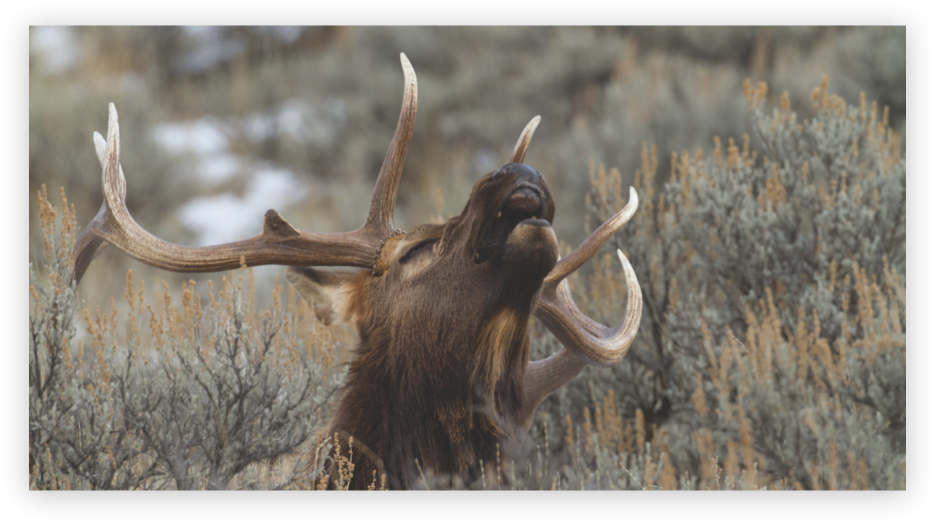
The ear-splitting bugle from the bull elk splintered my ear drum as I stood photographing. Physically, I was more than 25 yards away, but the high pitched and elongated call can be heard from a mile away. During September, these sounds replace the deep grunts of bison. Bull elk are “on the prowl,” competing fiercely to gather and guard their harem of cows.
Rut tactics are loud and showy: thrashing grasses, churning up mud, and urinating on their own hind legs to carry scent. Strutting regally with bits of grass and brush in his antlers like a crown, the bull bugles again and again, calling his harem. A powerful bugle may draw cows in, but they can also choose to go to another bull during this time.
“ Herding large groups, sometimes nine cows or more, is exhausting work for a bull. It’s at this time that a dispute and displacement often takes place: a fresh, equally matched bull who is similar in age and body weight may seize the moment to steal a few cows or take the entire harem from the exhausted “king.” Younger males might offer a challenge, but “deferring” plays a role when they realize they are outmatched, a natural part of future breeding success.
Deer and antelope also enter their rut during this time. The buck antelope approaches the doe with his head held high and slightly turned, signaling dominance with a subtle threat—“be obedient.” A distinctive display among pronghorn is the flare of their bright white rump, which exposes scent glands that release a pungent odor. While typically used to raise an alarm in the face of danger, I’ve also photographed this display during the rut, while the males were herding females, suggesting it may have a role in courtship, too.
October: Moose in the Mood
Bull moose begin announcing their rut in October with short and deep grunts as they approach a cow. She, on the other hand, is quite the chatter box responding with long, groaning moans. The bull thrashes bushes and exhibits flehmen behavior, curling his lip to better detect her scent.
A higher-pitched whining sound occurs when two dominant bulls approach each other for a possible dispute. While fights can occur, much is often communicated through posture and sound.
November: Ram Clashes and Rocky Rumbles
It’s mid-November and the clash sounds like colliding boulders. I scan the nearby rocky cliffs, straining to see the source. It is two Rocky Mountain bighorn rams locked in combat, nearly camouflaged against the gray-toned boulders.
They are noiseless with their romantic pursuit, until two mighty rams decide on the dominant hierarchy for a few of the ewes. When two powerful males decide to test the hierarchy for breeding rights, the result is a thunderous headbutt. The big rams, like the other mammals, retrieve the scent of a female by licking and smelling the hind end. Through the Jacobson’s organ, they analyze pheromones and determine her reproductive status.
The rut brings a flurry of activity among the rams. When a male senses a receptive ewe, he presses his head to her backside and performs the “flehmen” response, curling the upper lip back to expose the teeth to better analyze her scent. If the female is ready for the romantic liaison, the delirious rams chase the females nonstop.
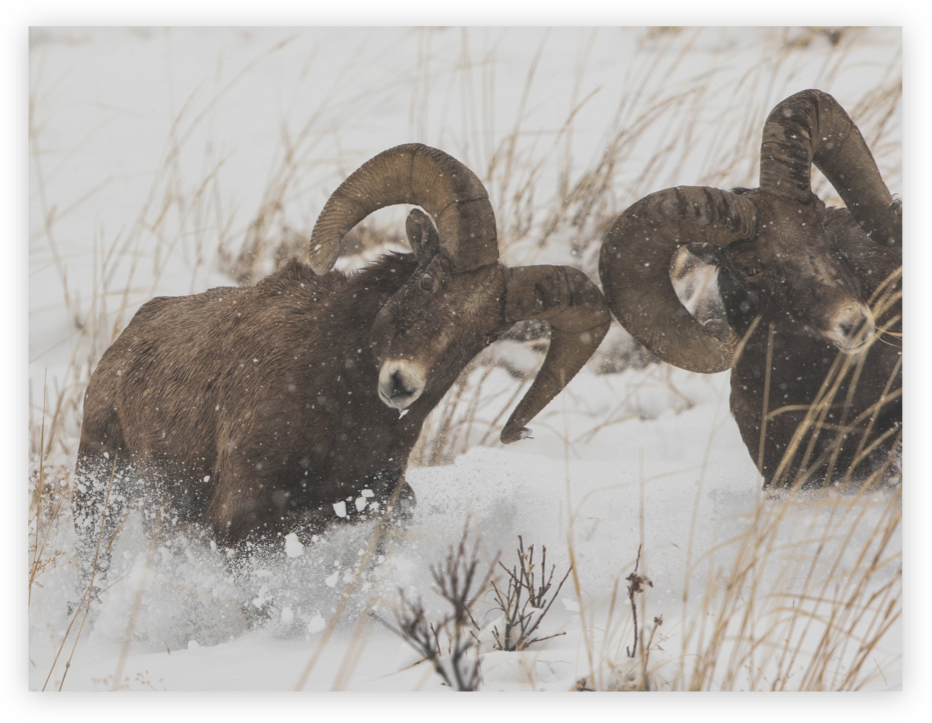
Meanwhile, the bachelor rams also form their own version of a “rugby scrum,” a tight cluster of males with heads together and white rumps facing out. This formation is a nonviolent way to assess dominance. Just photographing their own behavior with each other is entertaining. Eventually, a dominant ram will “paw” the other with their hoofed leg and apply head pressure upon the lesser ram’s shoulder.
Also in Autumn: Raptor Rivalries
Autumn is an electric season for these animated disputes over territorial possession, whether that be a harem of elk cows or a fish carcass between raptors.
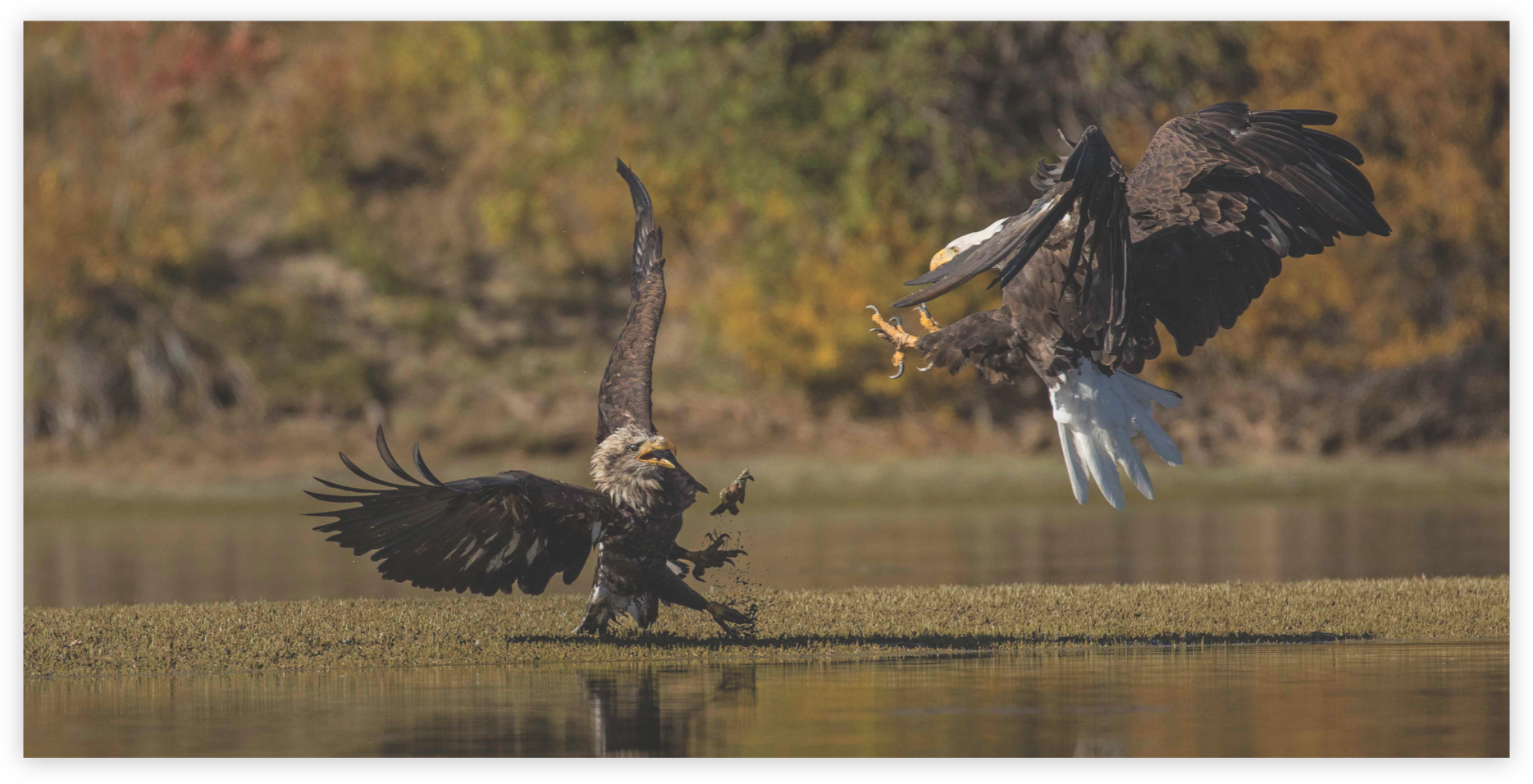
Seeing two differently aged bald eagles clash over a meal is just as riveting as any antlered showdown. Talons reach out, beaks snap like scissors, and six-to-seven-foot wings slice the air as they collide. With the lifeless carcass flying through the air, mud is kicked up as the raptors squabble on the sandbar. The fully mature, white-headed eagle becomes the victor claiming the delectable meal.
Whatever the possession, it is highly prized. Most often these conflicts—avian or mammalian—are resolved through displays rather than full-on fights. In most cases, posturing and deferral preserves energy and prevents injury. Among large mammals, success in the rut often hinges on body mass and the size of horns or antlers. The vicious action can look brutal, but there’s a strategy involved: younger, inexperienced males and older, weakened ones often choose to defer rather than defend. Another season awaits. Their time will come.