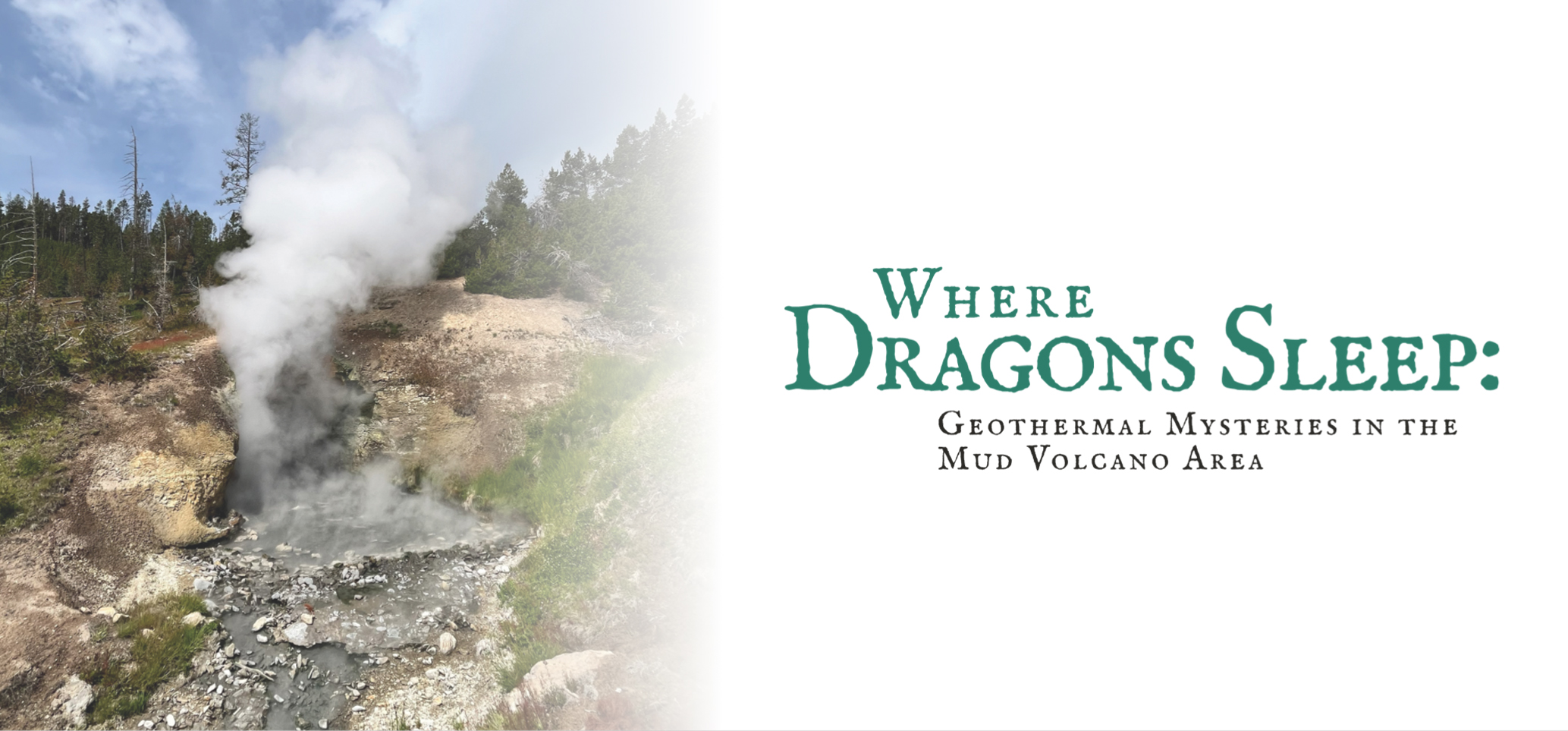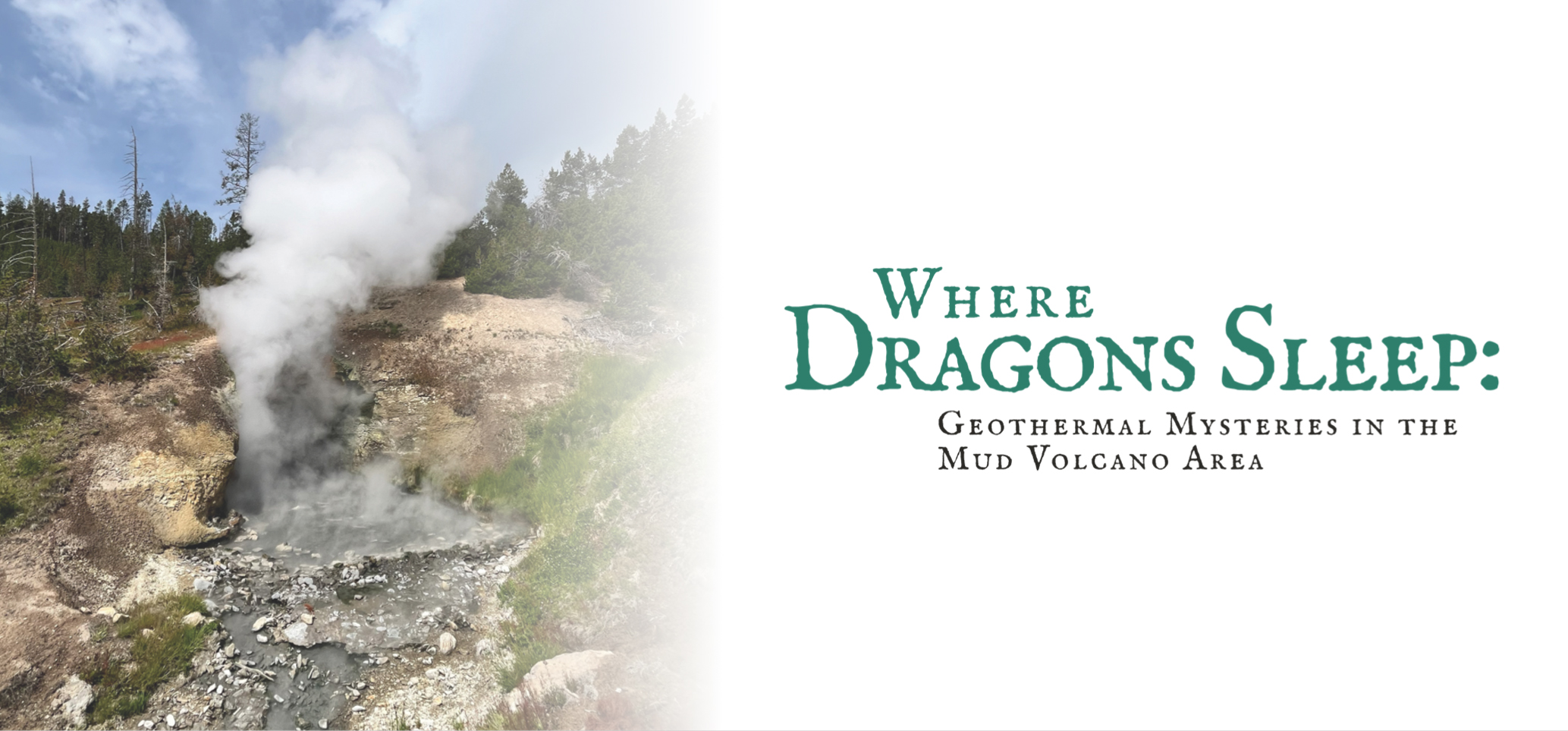

Tucked on a hillside in Yellowstone, pools of murky gray water bubble to the surface. Water churns in geothermal pools. Billows of steam escape from cracks and crevices in the Earth’s crust, sending a foul smell akin to rotten eggs wafting into the air. The earth grumbles, hisses, and gurgles—hinting at a mythical world beneath the surface. It’s no wonder that this eerie, otherworldly landscape in the Hayden Valley has inspired the mythical names listed on the map—Black Dragon’s Cauldron and Dragon’s Mouth.
Standing among the steam, the stink, and the sounds of a restless Earth, it’s easy to let imagination take over. Could this be the home of a dragon? Are those deep, guttural groans the snores of something massive hiding in a cave below—waiting for the perfect moment to appear, breathing fire at all who dares to get close? One can’t help but wonder: is this where fire-breathing dragons live?
Just north of Yellowstone Lake, along Grand Loop Road, the Black Dragon’s Cauldron bubbles atop a small hill—a steamy pool of hot mud where a half-mile boardwalk guides visitors on a mysterious walk. Unlike many of the park’s ancient geothermal features, Black Dragon’s Cauldron is relatively new, having first erupted in 1948. The eruption was powerful enough to uproot trees, send black mud twenty feet into the air, and reshape the landscape in the process. The cauldron continued to experience such bursts for several decades before coming to a rest. Originally named “Demon of the Backwoods” by park rangers, it is easy to see why the rangers chose the name with the landscape hinting at a mythical layer living just below the surface.
Walking along the boardwalk, the rhythmic plopping and bubbling sound of boiling mud pots lures visitors further down the path to a pool of near-boiling water cresting the earth’s surface with enough force to create its own wave pool.
BY Sarah May
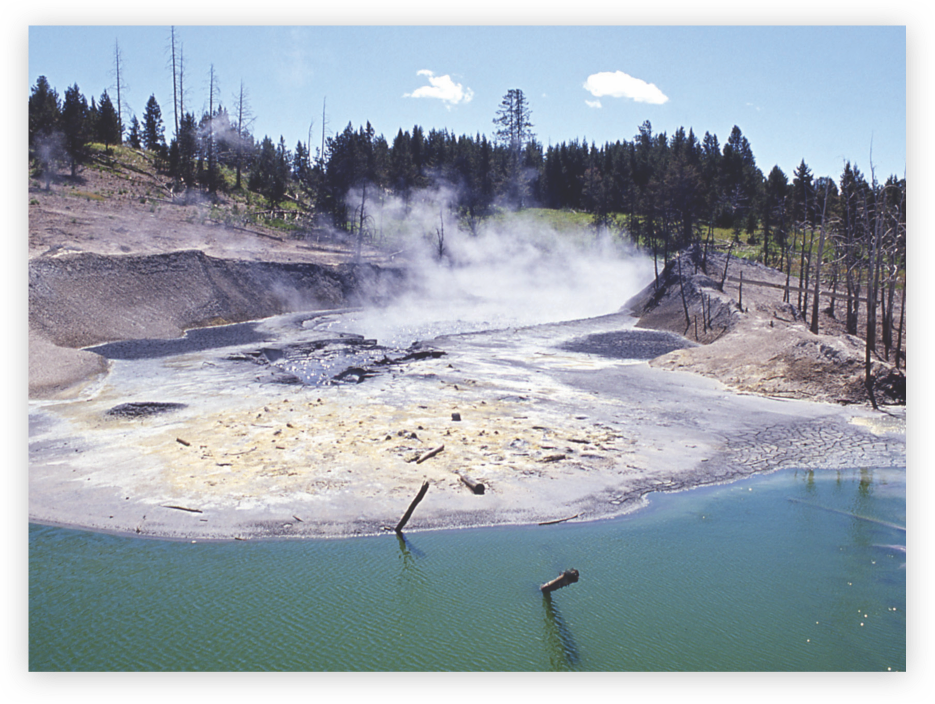
Black Dragon’s Cauldron; Mud Pots, Mud Volcano area | PHOTO COURTESY OF NPS
Steam billows into the air, curling and twisting with the breeze, while the ground beneath hisses and breathes. The smell of sulfur lingers in the air, sharp and unmistakable, reminding us that this land is still very much alive, rustling just beneath the surface.
Walking past the gurgling geological features of the area along the boardwalk, a dense bloom of steam is spotted in the distance. A narrow creek of mineral-stained water runs beside the path as the crashing sound of waves sloshing into the rocky sides of the pool grows louder.
Suddenly, a steamy cavern appears, and a deep roar is heard emanating from within. The waves surge and retreat at the mouth of the cave. Small children approach with caution. It’s not the sound of water alone one hears. It’s something heavier, more alive. The water pulses, as if being pushed and pulled by a massive unseen force, like the slow, measured breath of something ancient lying just out of sight. With a dash of imagination, it is easy to believe a mythical creature slumbers just inside the cave.
Walking past the gurgling geological features of the area along the boardwalk, a dense bloom of steam is spotted in the distance. A narrow creek of mineral-stained water runs beside the path as the crashing sound of waves sloshing into the rocky sides of the pool grows louder.
Suddenly, a steamy cavern appears, and a deep roar is heard emanating from within. The waves surge and retreat at the mouth of the cave. Small children approach with caution. It’s not the sound of water alone one hears. It’s something heavier, more alive. The water pulses, as if being pushed and pulled by a massive unseen force, like the slow, measured breath of something ancient lying just out of sight. With a dash of imagination, it is easy to believe a mythical creature slumbers just inside the cave.
Affectionately named Dragon’s Mouth, this geothermal feature is one of Yellowstone’s more scientifically fascinating features, as the hydrothermal activity is a result of water interacting with the underlying volcanic activity. In 1999, a mysterious geothermal event occurred that dropped the water’s temperature by 10 degrees and changing the water’s color from green to white. The cause of the change remains unknown and serves as a cautionary reminder of Yellowstone’s potential. One can’t help but wonder if the next big change is in the near future.
At the edge of the pool, an observation deck offers a front-row seat to Dragon’s Mouth. From there, brave onlookers can take in the cavern’s eerie sights and sounds as steam billows into the air.
Perhaps more than any other place in the park, this geothermal corner of Yellowstone blurs the line between science and myth. With each hiss of steam and every bubbling burst of mud, the land whispers of ancient forces at work, both geological and mythical. From the violent birth of Black Dragon’s Caldron to the pulsing breath of Dragon’s Mouth, the hillside feels alive, as if some great creature stirs just beneath the surface. Whether guided by curiosity, science, or wonder, one thing is certain: this is not just a place you visit—it’s a place that leaves you wondering about the possibility of another world.
At the edge of the pool, an observation deck offers a front-row seat to Dragon’s Mouth. From there, brave onlookers can take in the cavern’s eerie sights and sounds as steam billows into the air.
Perhaps more than any other place in the park, this geothermal corner of Yellowstone blurs the line between science and myth. With each hiss of steam and every bubbling burst of mud, the land whispers of ancient forces at work, both geological and mythical. From the violent birth of Black Dragon’s Caldron to the pulsing breath of Dragon’s Mouth, the hillside feels alive, as if some great creature stirs just beneath the surface. Whether guided by curiosity, science, or wonder, one thing is certain: this is not just a place you visit—it’s a place that leaves you wondering about the possibility of another world.