
When snow blankets Yellowstone, the landscape becomes a storybook of movement. Every track pressed into the snow is a clue—evidence of survival, hunting, or play. Winter is one of the best times to see which animals share the park with you, even if you never spot the creatures themselves. Here are some of the most common—and most exciting—tracks to keep an eye out for.
1. Wolf
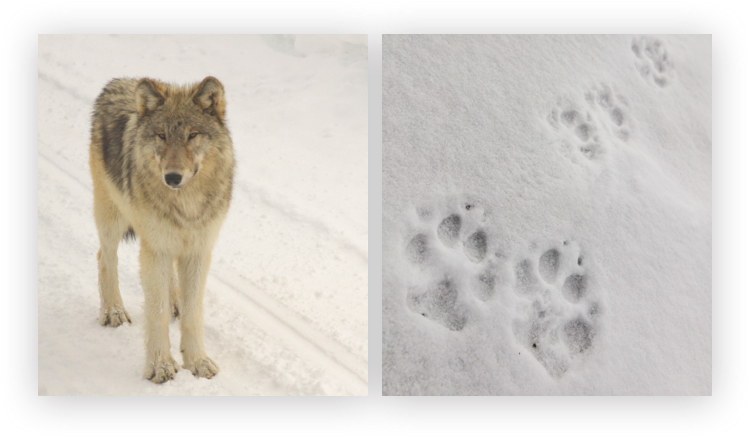
Large oval paw prints with four distinct toes and visible claw marks often belong to wolves. Their tracks typically appear in a straight line as they conserve energy by walking with purpose. Spotting a wolf trail in fresh snow is a reminder that Yellowstone is still wild.
Left: Wolf from the Canyon pack standing on road near Norris taken from snowcoach through the glass window, PHOTO BY NPS / DIANE RENKIN, Right: Wolf tracks on Fountain Freight road, PHOTO BY NPS / JACOB W. FRANK,
2. Coyote
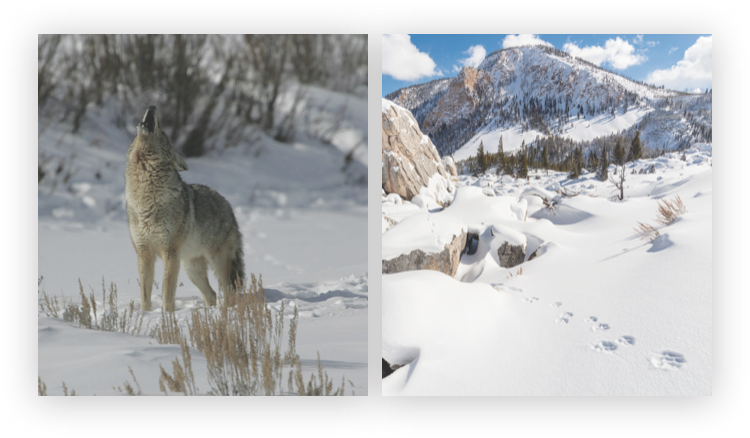
Smaller than wolves, coyote tracks can look similar but are usually daintier and more zigzagging. Coyotes often weave as they hunt for voles beneath the snow, leaving looping patterns that betray their playful, curious nature.
Left: Coyote howling in Lamar Valley, PHOTO BY NPS / JIM PEACO, Right: Coyote tracks in the Hoodoos, PHOTO BY NPS / JACOB W. FRANK
3. Fox
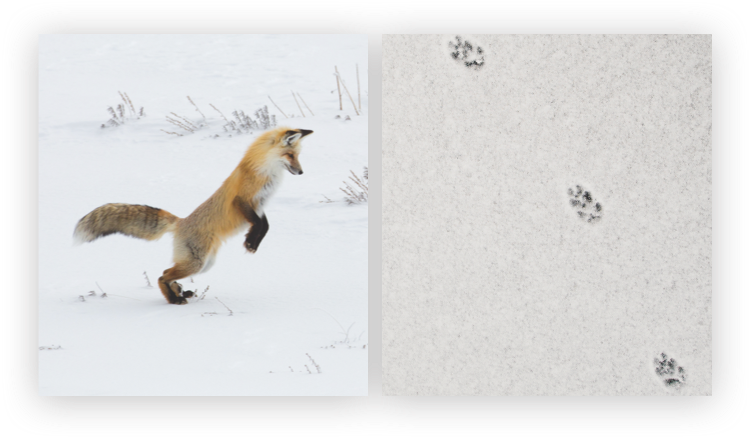
Look for small, catlike prints in a nearly straight line, sometimes ending with a neat crater where the fox has pounced into the snow. Red foxes are common in Yellowstone and their hunting style—listening, leaping, and diving—is written clearly in the snowpack.
Left: Hunting fox, Hayden Valley, PHOTO BY NPS / NEAL HERBERT, Right: Fresh fox footprints in snow, ADOBE STOCK PHOTO
4. Elk
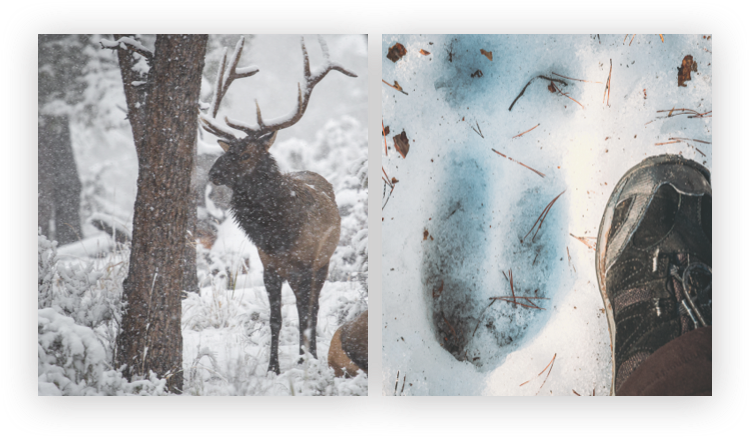
Elk hooves leave large, heart-shaped prints that are hard to miss. In winter, herds often move together, so you might find whole networks of tracks winding through valleys or cutting across ridges where snow is shallower.
Left: Bull elk and snow falling, PHOTO BY NPS / NEAL HERBERT, Right: Imprint of an elk trail on snow, comparison with size of a person’s foot, ADOBE STOCK PHOTO
5. Bison
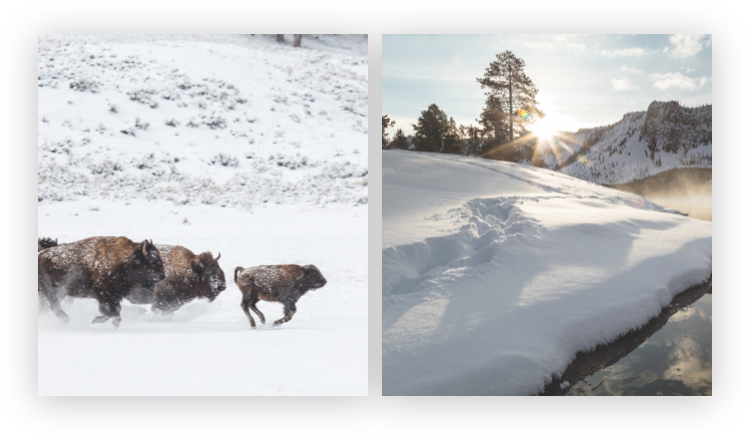
Massive, rounded hoof prints belong to Yellowstone’s most iconic residents. Often, you’ll see deep troughs in the snow where bison have “snowplowed” with their heads, searching for grass beneath the crust.
Left: Bison, Lamar Valley, PHOTO BY NPS / NEAL HERBERT, Right: Bison tracks along the Madison River, PHOTO BY NPS / JACOB W. FRANK
6. Snowshoe Hare
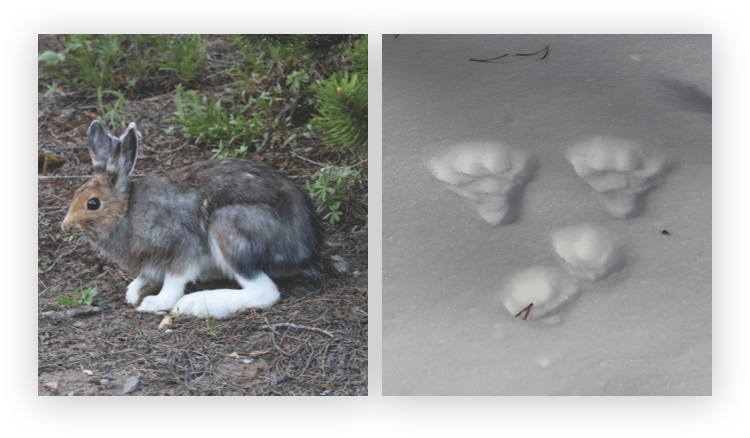
These tracks are like an exclamation point in the snow: large hind feet in front, small front feet behind. Snowshoe hares are abundant in lodgepole pine forests, and their tracks often crisscross wildly as they zigzag away from predators.
Left: Snowshoe hare near Fishing Bridge, PHOTO BY NPS / ADDY FALGOUST, Right: Snowshoe hare tracks in the snow, PHOTO BY NPS / ADDY FALGOUST
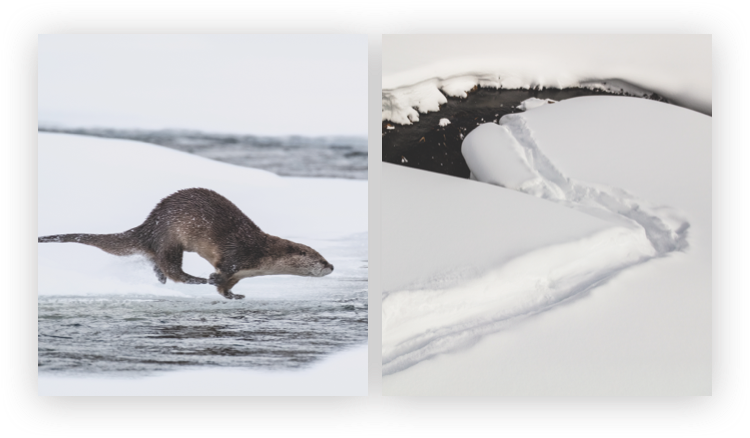
7. River Otter
Along streams and rivers, look for paired paw prints with belly-slide marks between them. Otters turn winter into playtime, often sliding down snowy banks or along ice edges, leaving whimsical patterns behind.
Left: River otter dive sequence (1), PHOTO BY NPS / JOSH SPICE, Right: River otter slide tracks, PHOTO BY NPS / JACOB W. FRANK
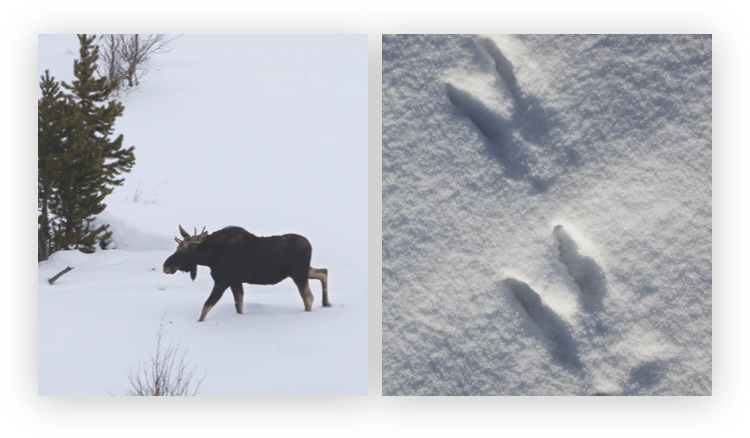
8. Moose
Moose tracks are larger and more oval-shaped than elk, with pointed ends. In deep snow, you may find long trenches where a moose has forged a solitary path through willows in search of browse.
Left: A bull moose walks through the snow, PHOTO BY NPS / ADDY FALGOUST, Right: Moose tracks in the snow, ADOBE STOCK PHOTO
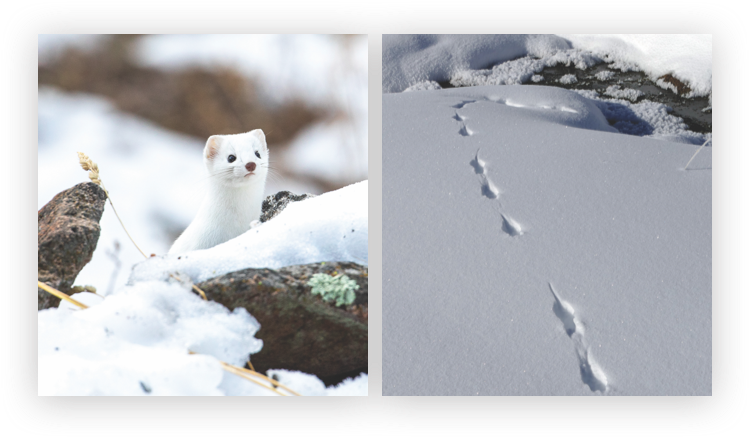
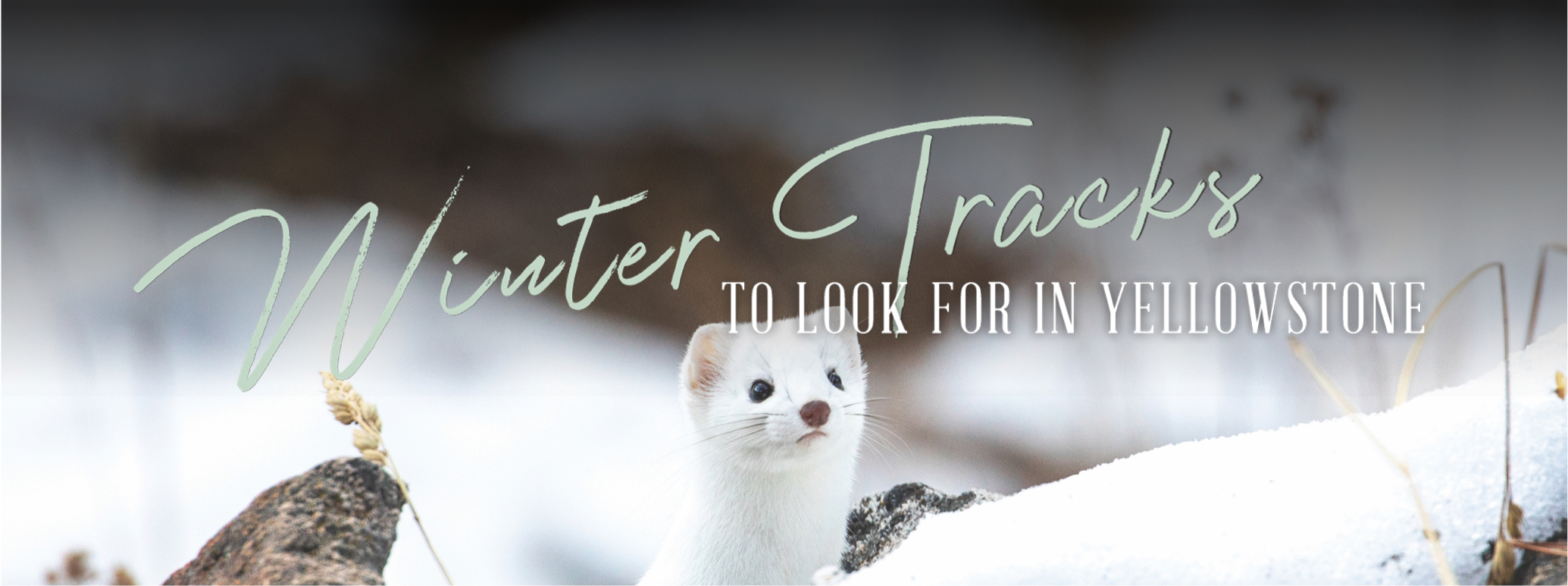
9. Weasel (Ermine)
Tiny prints bounding in pairs often belong to ermine, whose white winter coats make them almost invisible against the snow. Their tracks lead in quick, energetic hops, often diving into snow tunnels after mice.
Left: Long-tailed weasel, PHOTO BY NPS / JIM PEACO Right: Weasel tracks at the top of Snow Pass, PHOTO BY NPS / DIANE RENKIN
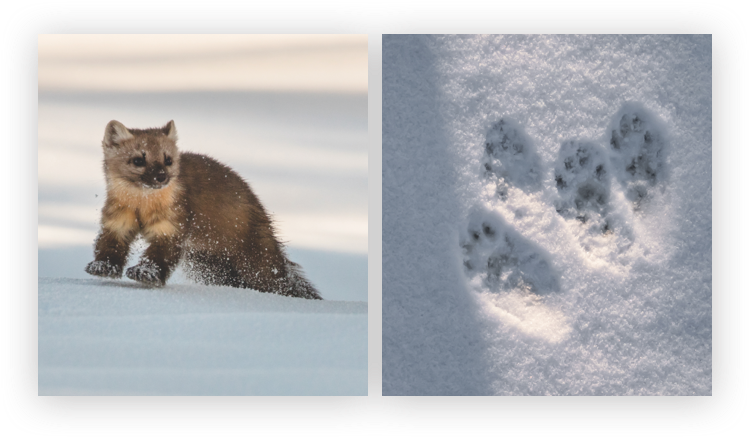
10. Marten
A cousin of the weasel, martens leave paired tracks with a bounding pattern, usually weaving among trees. Their playful gaits and woodland habitats make them a fun track to stumble upon in Yellowstone’s quieter forests.
Left: Marten bounding through the snow, PHOTO BY NPS / JACOB W. FRANK, Right: Footprints of the pine marten in snow in winter, ADOBE STOCK PHOTO
The snowy canvas of Yellowstone is ever-changing, and tracks can blur in wind or sun. Carrying a small animal tracks guide—or snapping photos of prints you see—can help you identify Yellowstone’s winter residents long after your trip.